 Chameza Group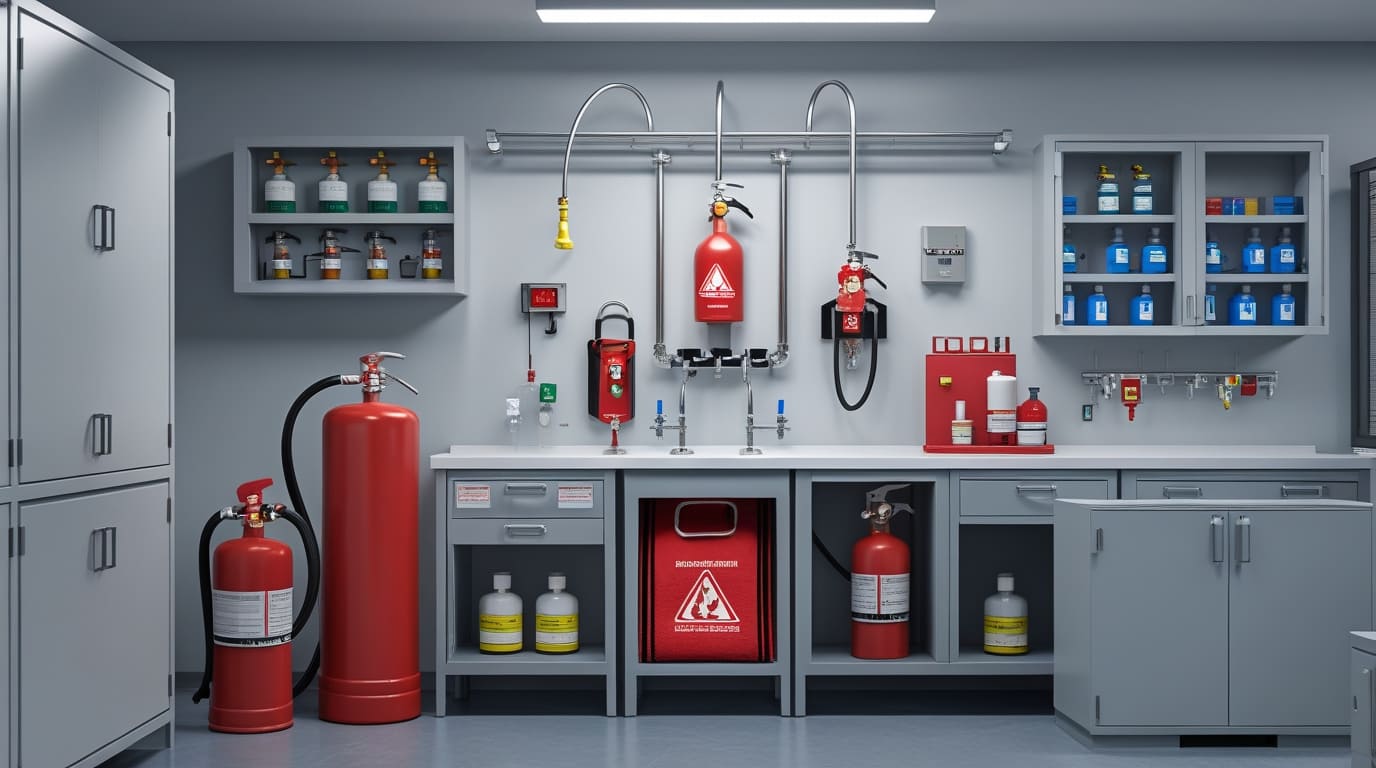
Laboratories are high-risk environments where chemicals, electrical equipment, gases and heat sources work together to support scientific progress — but they also create potential fire hazards. Whether it is a research lab, educational lab, pharmaceutical unit, pathology center or industrial testing facility, the risk of fire can never be ignored. Implementing intelligent fire-safe design strategies not only protects costly laboratory assets but also saves lives.
Fire safety is not just a regulatory requirement — it is a responsibility. Companies like chameza.in, labturnkey.in, and labcreator.in emphasize proper laboratory planning because the right design can minimize fire occurrences and reduce damage when an accident happens.
This article explains how fires start in labs, the essential design principles that reduce risks, and why every modern laboratory must prioritize fire safety from day one.
Understanding the Risks Behind Laboratory Fires
Laboratories handle various fuels, ignition sources and oxidizers — the three components that form the fire triangle. When any two of these interact under the wrong conditions, fire incidents occur.
Some common causes include:
- Improper chemical storage
- Incompatible chemicals placed together
- Overheated electrical equipment
- Damaged wiring or circuits
- Gas leaks from cylinders or pipelines
- Improper handling of flammable substances
- Lack of ventilation
- Human error due to poor training or oversight
Because labs operate continuously and sometimes use highly reactive materials, fire safety must be integrated into both design and daily operations.
Designing a Fire-Safe Laboratory Layout
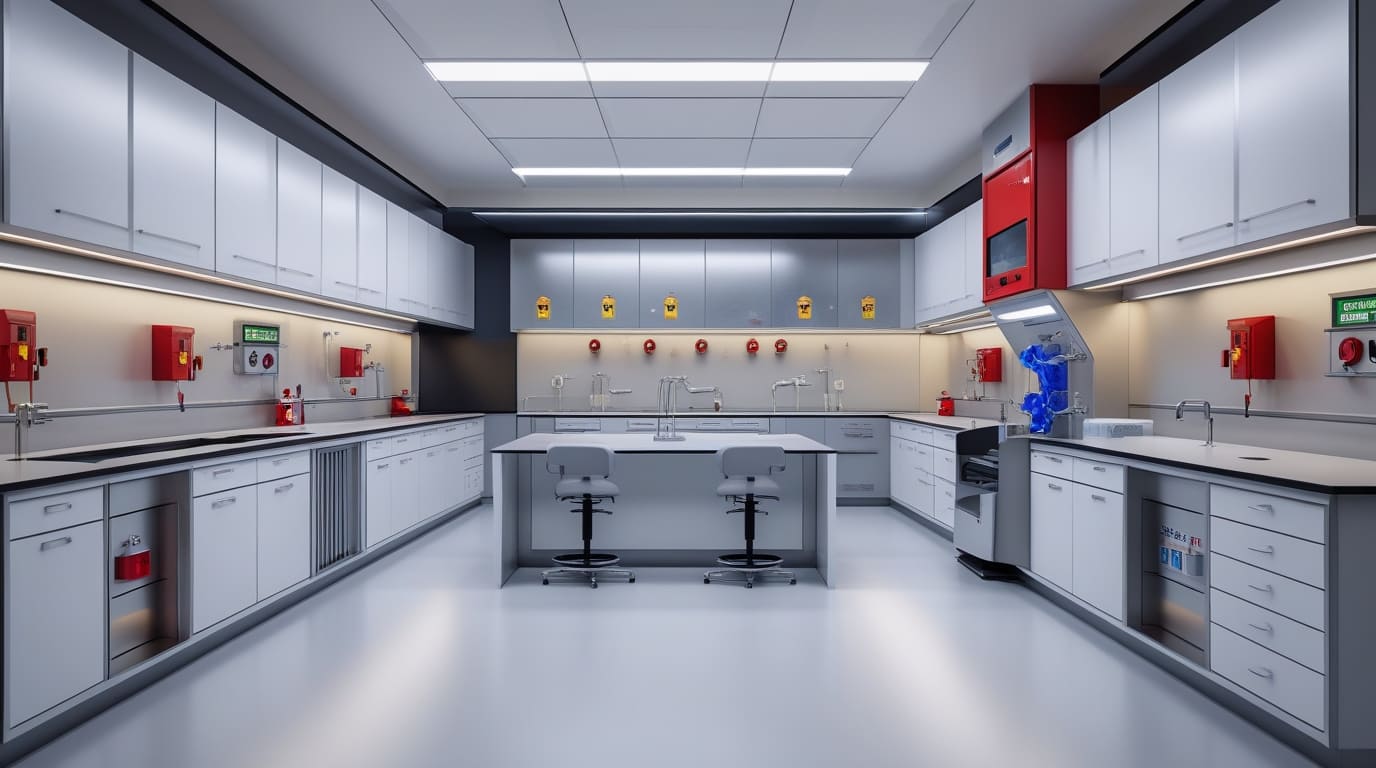
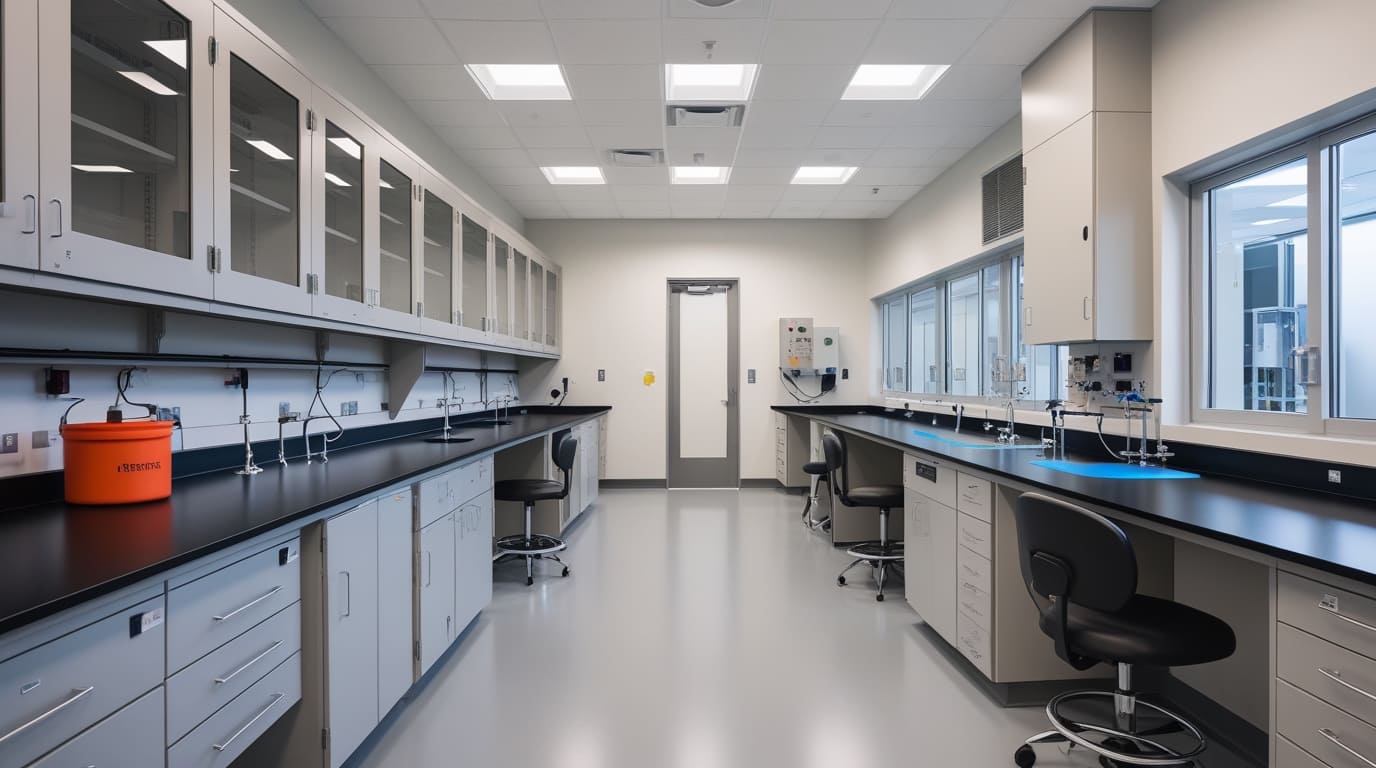
1-Segregation of Hazard Zones
Labs must be divided into zones based on risk level. High-hazard areas like solvent cabinets, acid storage rooms, gas-cylinder bays and flammable collections must be isolated with fire-resistant walls and doors.
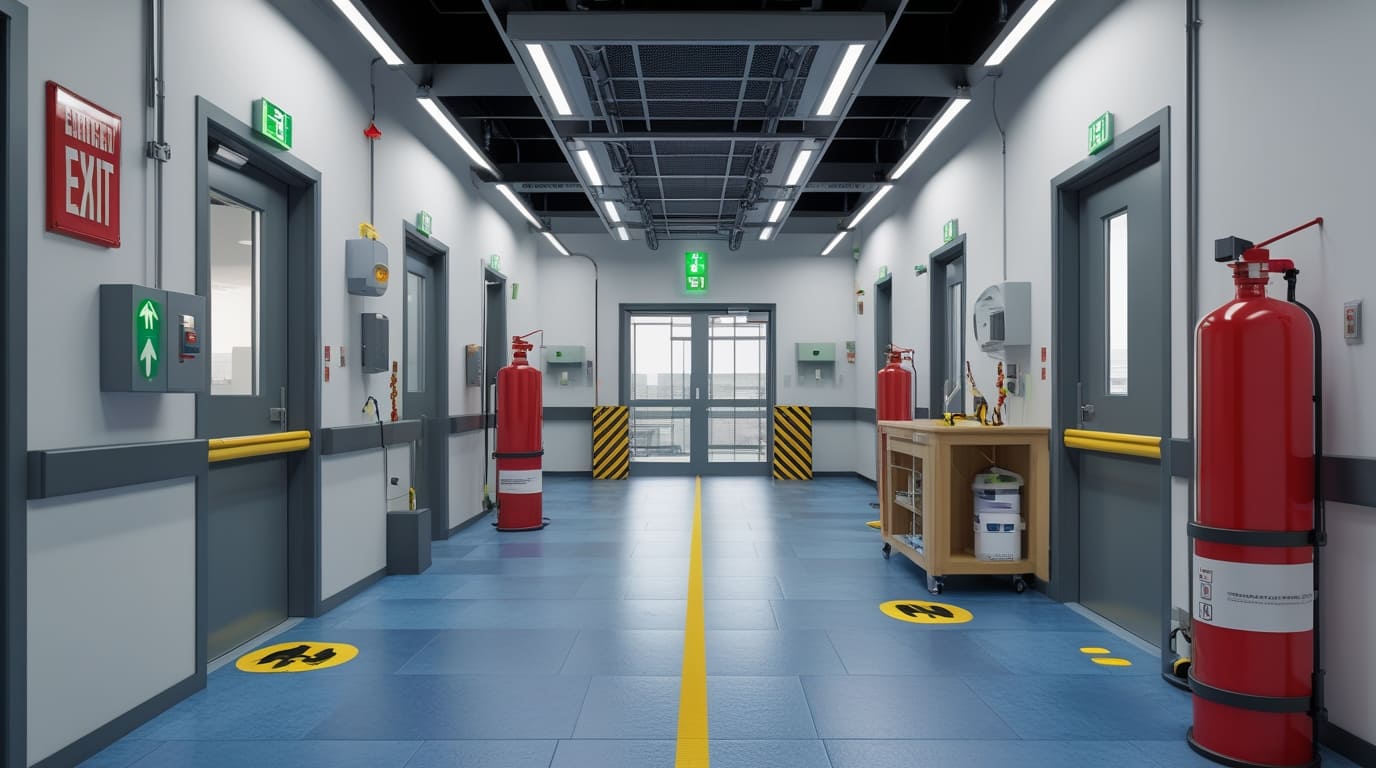
Clear Emergency Exits
Every laboratory must have:
- At least two clearly visible exits
- Exit signboards with emergency lighting
- Obstacle-free pathways wide enough for evacuation
A smartly designed layout ensures personnel can evacuate within seconds, even during panic situations.
2- Ventilation Systems to Prevent Ignition
Proper ventilation is one of the strongest defenses against fire. Fume hoods, exhaust blowers and air filtration systems remove harmful vapors and prevent the accumulation of flammable gases.
Some important features include:
- Dedicated ducts for chemical fumes
- Negative pressure rooms for hazardous materials
- Spark-free motors in exhaust systems
A well-ventilated lab reduces the risk of explosions caused by volatile organic compounds (VOCs).
3- Fire-Resistant Construction Materials
Using the right materials can slow down fire spread dramatically. Essential elements include:
- Fire-rated walls and ceilings
- Non-combustible flooring
- Fire-resistant countertops like phenolic resin or epoxy
- Doors with minimum 60–120 minutes fire rating
Such materials help contain fire in a single zone, giving time for safe evacuation and fire response teams to act.
4- Proper Chemical Storage & Labeling
Many lab fire accidents begin with chemical misuse or poor storage. A good fire-safe design includes:
- Acid-resistant cabinets
- Solvent storage units with ventilation
- Explosion-proof refrigerators for flammable liquids
- Color-coded labeling for quick identification
- Separation of incompatible chemicals like acids & bases
Proper storage minimizes chemical reactions that can trigger fires.
5- Electrical Safety Systems
Electrical faults are a leading cause of laboratory fires. To prevent this:
- Install overload protection
- Use spark-proof switches and sockets
- Keep wiring away from wet areas
- Conduct periodic maintenance checks
- Use UPS for critical instruments
Electrical systems must be planned carefully to avoid overloads and short circuits.
6- Gas Cylinder Safety in Laboratories
Gas cylinders require thoughtful placement and monitoring. Key strategies include:
- Keeping cylinders in ventilated outdoor/isolated rooms
- Regular leak testing
- Using stainless steel gas pipelines
- Installing gas detectors with auto-shutoff capability
A single gas leak can trigger major explosions — proper design prevents this.
7- Automatic Fire Detection & Suppression Systems
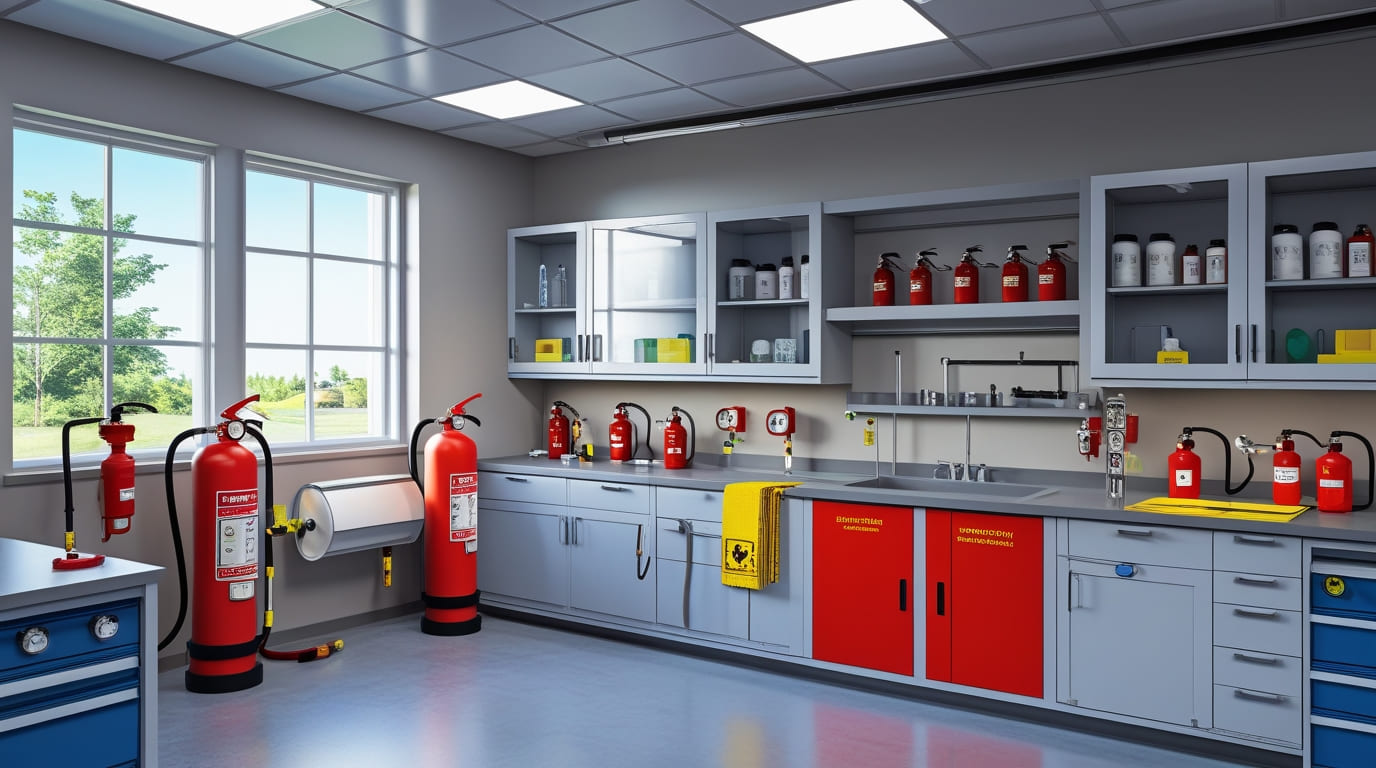
Modern labs must integrate smart fire-protection systems such as:
Fire Detection
- Heat detectors
- Smoke detectors
- Flame detectors in high-risk zones
- Alarm systems connected to control rooms
Fire Suppression
- Automatic sprinklers
- Gas-based suppression systems (FM-200, CO₂)
- Fire extinguishers for different fire classes
Detection and suppression systems reduce the intensity of the fire and prevent total property loss.
8- Staff Training & Fire-Response Preparedness
Design alone cannot eliminate all risks. Staff must be trained in:
- Using fire extinguishers
- Recognizing chemical hazards
- Safely shutting down equipment
- Evacuation procedures
- Emergency communication
Regular mock drills ensure everyone knows what to do during an emergency.
9- Why Fire Safety Must Be a Priority in Every Laboratory
Fire safety is not a one-time setup — it is a continuous process. The Importance of fire safety in laboratories lies in ensuring that scientists, technicians, students and visitors can work without fear. Fire can destroy decades of research, expensive instruments and sensitive data in minutes. More importantly, it can endanger lives.
10- Understanding Different Fire Categories in Labs
Laboratories experience unique fire types based on the materials involved. The Types of fire in laboratory include:
- Class A (ordinary combustibles)
- Class B (flammable liquids)
- Class C (electrical fires)
- Class D (metal fires)
- Class K (oils & grease in food science labs)
Knowing the fire class helps determine the correct extinguishing method.
11- Laboratory Fire Safety Techniques Every Facility Should Follow
The Types of fire safety in laboratories include:
- Prevention (eliminating fire risks)
- Protection (installing fire-resistant materials)
- Detection (identifying fire early)
- Suppression (controlling fire quickly)
- Evacuation (moving people to safety)
A combination of these ensures maximum fire security.
Conclusion: Safe Laboratory Design Saves Lives
Fire safety in laboratories is not optional — it is essential. By using proper design strategies, following safety protocols and selecting the right materials, laboratories can drastically reduce the risk of fire-related accidents. Companies providing lab turnkey solutions, including chameza.in, labturnkey.in, and labcreator.in, recommend thorough planning because it ensures safety, compliance and smooth operations.
A well-designed laboratory protects not just equipment and property but also the most valuable asset — human life.